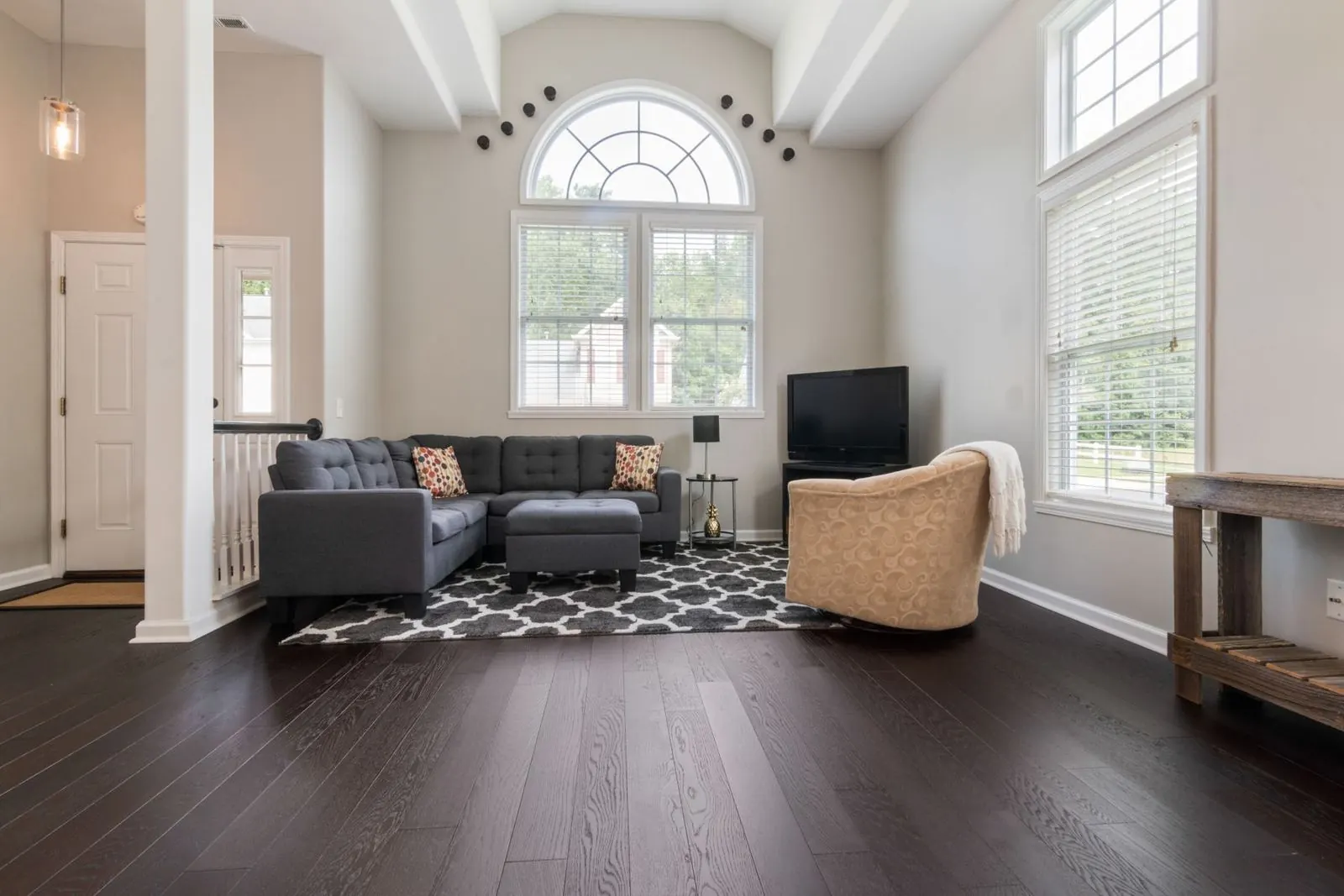
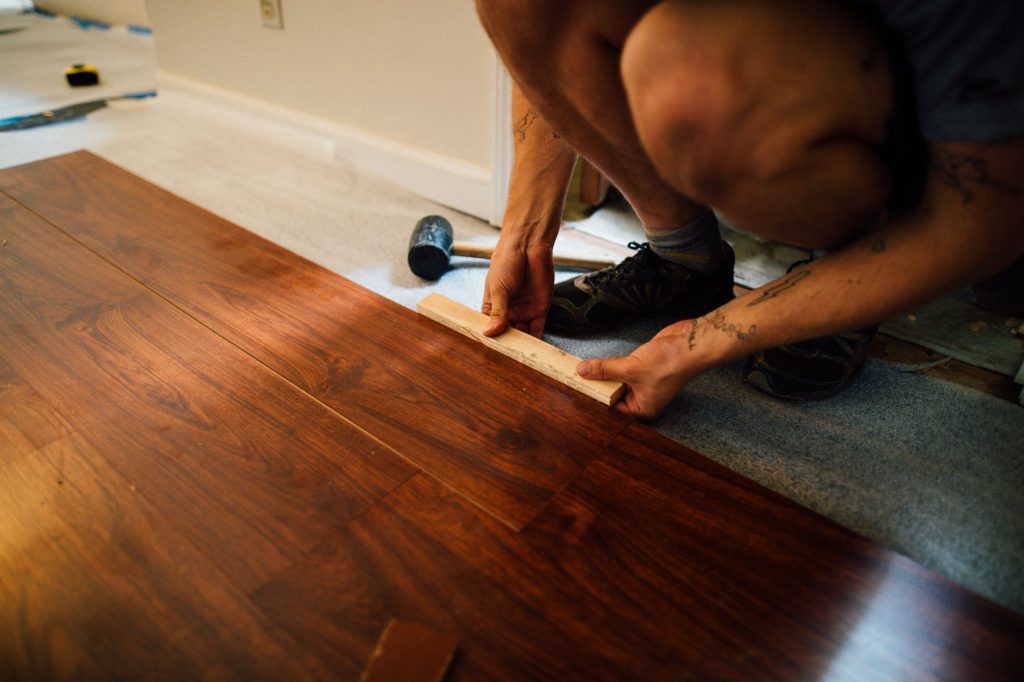
Laminate needs an underlayment under it, unless the planks already have one attached. In a Metairie home on a slab, you also want a moisture barrier over the concrete, while a raised wood subfloor usually takes a plain foam pad and no plastic against the wood.
So the honest answer to "what goes under laminate" depends on what's under your house. Below we cover each layer and how it's sold, then how long the planks should sit in the room before anyone clicks them together.
Are you supposed to put anything under laminate flooring?
Yes. This Old House puts it plainly: underlayment is not optional. Laminate floats, so it never gets glued or nailed down, and it needs a layer that evens out minor flaws in the subfloor while cushioning the planks. The same guide says planks with underlayment already attached don't need a separate layer, and that you should follow the maker's specs. One major laminate maker's own install page says to let its planks rest for at least 48 hours and advises always using an underlay.
Here's what the common options do:
- Standard foam. Bob Vila's underlayment guide says it suits plywood and OSB subfloors, but it has no vapor barrier and shouldn't go in damp areas.
- Combination foam. A foam layer joined to a vapor barrier. The same guide says it works on concrete as well as on wood.
- Felt. Dense and quiet. The guide suggests a thickness of 2 to 3 millimeters.
- Cork. A premium pick for noise, and the guide says it can cost nearly twice as much as foam.
- Attached pad. Built onto the plank, so you skip the roll. Check whether your maker allows anything extra under it.
Thicker isn't automatically better. Bob Vila warns that a thick underlayment lets the floor flex too much, and that flex can separate the seams. This Old House's cost guide says underlayment is typically sold in 100-square-foot rolls, with a separate moisture barrier also priced per roll. So a 300-square-foot room needs at least 3 rolls of each, plus whatever your seams use up.
What goes under laminate on a Metairie slab?
Concrete can pass moisture up from below even when it looks dry. This Old House recommends a vapor barrier under laminate over concrete, and it mentions a 6-mil polyethylene layer below the underlayment for slab conditions in a basement. Bob Vila says underlayment on concrete needs a vapor barrier, so moisture doesn't collect between the slab and the floor.
Before any of that goes down, the slab gets tested. This Old House describes a simple plastic sheet test: if moisture beads up on the plastic, the concrete still holds too much moisture to cover. Ask for a moisture reading too, since a sheet test only tells you what it caught during the time it sat there. The limit that matters is the one printed in your product's own install guide.
Metairie adds one more consideration. A NASA Jet Propulsion Laboratory study of 2009 to 2012 radar data reported notable subsidence here. A regional study can't speak for one lot, so check your own slab for flatness. Laminate is rigid, and a low spot can leave a plank flexing with each step. If you find a dip, plan on floor leveling before the underlayment goes in.
What goes under laminate on a raised floor?
A raised house changes the plan. The wood subfloor needs to be dry and flat, with no soft spots, and repairs come before any pad. Our subfloor preparation page covers that work. Don't assume you need plastic here. One major laminate maker's guide says no vapor barrier film goes on the wood itself, so read your product's instructions and choose the pad it names.
The moisture work on a raised house happens under the floor. The National Wood Flooring Association's guidelines note that unconditioned crawl spaces generally run more humid than the living space above, so we look below the house as well as at the boards. Our waterproof flooring page covers options for rooms where moisture stays a worry.
A quick way to check your own setup
Not sure which house you've got? Look for vents or an access door along the foundation, which usually means a crawl space below. Tap the floor at a closet or under an old rug. A solid, dead sound points to concrete, while a hollow sound or some give points to wood. Then read the plank's label for two things: whether it has an attached pad, and whether its maker wants a separate vapor barrier. Those two answers settle most of the shopping list.
Can laminate go over an existing floor?
Sometimes. This Old House says laminate can go over some flat flooring such as linoleum or sheet vinyl, but carpet has to come out, and rough surfaces such as brick or natural stone have to be leveled first. Its DIY guide adds that you'll usually want the old floor gone anyway, so you can check what's beneath it. If the old sheet goods or tile date from before the 1980s, stop and read EPA's asbestos guidance before you scrape or sand anything.
How long should laminate flooring sit before installing?
Most guides say at least 48 hours in the room where it'll be installed. This Old House's DIY guide says at least 48 hours, ideally at 60 to 80 degrees Fahrenheit and 30% to 50% relative humidity. Family Handyman says 48 to 72 hours. Bob Vila gives a shorter 24 to 48 hours. Since they disagree, follow your product's guide if it sets a number, and lean toward the longer end here.
Metairie's humidity is why. Laminate has a wood fiber core that swells and shrinks with moisture, and a box that spent weeks in an unconditioned warehouse needs time to settle at indoor conditions. Three habits help:
- Run the air conditioning for a few days before the boxes arrive, and keep it running after the install.
- Stack boxes flat in the room, away from exterior doors.
- Leave the expansion gap at the walls. Family Handyman says the floor's edges should be no closer than 1/4 inch, and your maker's guide may ask for more.
Should laminate go on a Metairie ground floor at all?
It depends on the room. FEMA's 2025 flood-resistant materials bulletin rates plastic laminate flooring as unacceptable for flood exposure. On our Metairie flooring page we steer laminate toward bedrooms and upstairs rooms that stay dry, and toward vinyl or tile for low rooms that could take water. No underlayment changes that. Our laminate benefits guide covers where the material earns its place, and our laminate flooring page compares your options.
Get the layers right in your Metairie home
We'll measure and take a moisture reading, then tell you which layers your floor needs before quoting laminate flooring installation. Call TurnKey Floorings at (504) 666-3393 or contact us online for a free estimate.