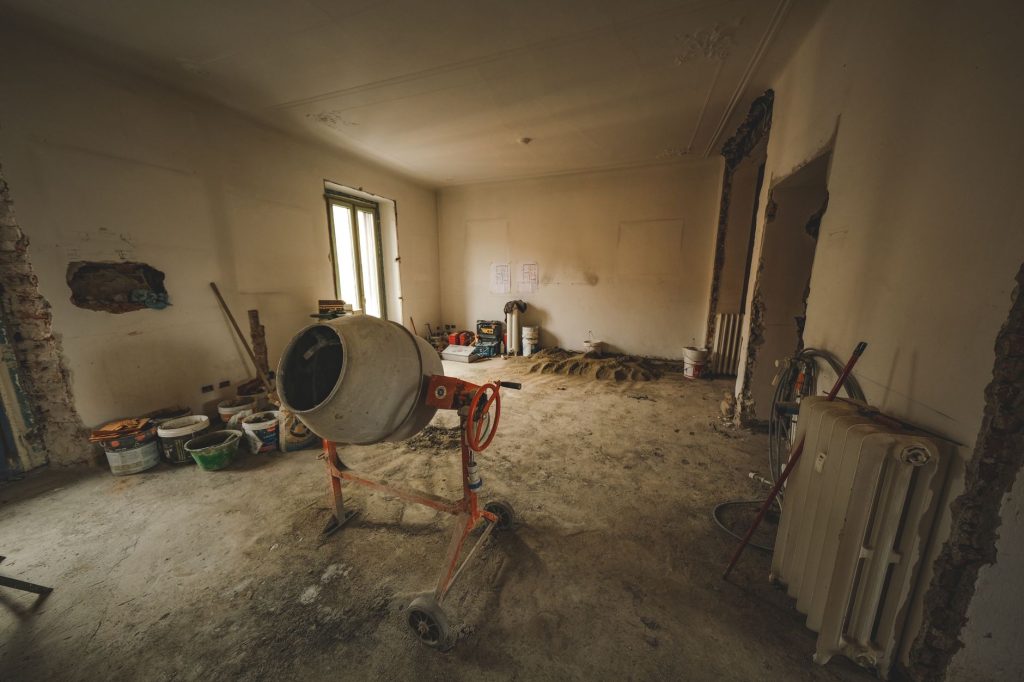
As a general market range, Fixr's September 2026 guide puts self-leveling compound on a concrete slab at about $4.50 to $7 per square foot installed. In Metairie, the larger question is whether the floor surface is the problem or the house has moved, because structural repairs cost far more, and on a surface job the depth of the low spots sets the price.
We price each job after measuring. Below we separate those two jobs, explain the easiest way to level a floor, and answer whether you can do it yourself.
How much would it cost to level floors?
Published guides price this work three different ways, which is one reason quotes can look so far apart:
- Self-leveling compound on a slab, installed: $4.50 to $7 per square foot, materials and labor together, per Fixr (2026). On a 300-square-foot room, that's $1,350 to $2,100, so ask what area the bid assumes.
- Subfloor leveling as an add-on to a new floor: $1 to $5 per square foot, per Inch Calculator's 2026 vinyl flooring guide, or $300 to $1,500 on the same room. Check whether a quote covers spot repairs or a full pour.
- Compound as a DIY material: about $1.50 per square foot at 1/8 inch thick, per a Bob Vila guide last updated in 2022. Prices have likely moved since then, and deeper dips use far more product.
All of that covers the surface. If the slope comes from the structure, you're looking at a different kind of bill, and Fixr prices it differently:
- Sagging floor repair overall: most homeowners pay $1,000 to $8,500, per Fixr (2026), with severe structural work above $20,000.
- Sistering a damaged joist: $150 to $325 per joist, per Fixr (2026), so ask how many joists the bid counts.
- Foundation repairs tied to sagging floors: typically $2,200 to $8,200, per Fixr (2026), and it says lifting a foundation can exceed $20,000.
Depth drives the price of a surface job more than area does. A shallow dip in one corner might take a few bags. A slope running across a room means more compound and more time. That's why we measure with a straightedge before we talk numbers, and why a price per square foot quoted over the phone doesn't mean much.
Here's the quantity math for a 300-square-foot Metairie room that's headed for vinyl plank. A 1/8-inch layer over the whole floor is about 3 cubic feet of compound. A 1/4-inch layer is about 6, so doubling the depth doubles the product. If only 60 square feet needs a 1/4-inch fill, that's about 1.25 cubic feet, which is why a spot fix can use far less than a thin pour over the whole room. These are general market figures, not our quote, so ask for a written estimate. Price your new floor separately, since all of this only gets the surface ready. Our flooring installation page shows where leveling fits in the order of work.
Is it the floor or the house in Metairie?
This is the first thing we sort out, since it decides who you call. We tell homeowners to look for these signs.
Signs it's the floor surface
You feel dips underfoot, see gaps under a straightedge, or notice tile edges sitting higher than their neighbors. Planks may flex and click when you step on them. That's work we handle, and our floor leveling page walks through how it runs.
Signs it's the structure
Doors and windows stick, stair-step cracks show up in the walls, or a slope runs the length of the house. Bob Vila also says to call a pro if joists look rotted, cracked, or broken, or if you find termite damage or cracks in foundation walls. Those call for a house leveling company before any floor work starts.
Why this comes up here
A NASA Jet Propulsion Laboratory study of 2009 to 2012 radar data reported notable subsidence in Metairie and said the movement could be related to Mississippi River levels. It named groundwater pumping and dewatering as the main contributors across the study area. That doesn't mean your house is sinking, and a radar map can't speak for one lot. But it's a good reason not to assume an old dip came from a bad install. Our Metairie flooring page covers how we plan around water and movement here.
What is the easiest way to level a floor?
Bob Vila says the easiest way involves a self-leveling compound. It works on a slab, and on wood subfloors that are uneven but still in decent shape. A delaminated wood subfloor is another matter: the fix there is replacing damaged panels with new ones. Here's how a typical job runs on a slab:
- Measure. Check the floor with a 10-foot straightedge and mark every high and low spot.
- Test and prep. A slab gets a moisture test. Old flooring and adhesive come up.
- Grind and pour. High spots are ground down and the surface is primed. Then low areas are patched or poured.
- Cure and re-check. Once the leveler cures, we measure again before the new floor goes down.
A raised floor runs differently. We check the crawl space first, then build up low areas and put a flat underlayment on top. Our subfloor preparation page has the details.
How flat is flat enough?
The target comes from the floor you're installing. Check the product's guide, since these vary:
- Vinyl plank and LVT: commonly no more than 3/16 inch over 10 feet.
- Large tile: for an edge of 15 inches or longer, ANSI A108.02 allows no more than 1/8 inch in 10 feet.
- Laminate and hardwood: follow the limit in the product's install guide.
Can I level a floor myself?
You can level a small area. Bob Vila says leveling can be either a DIY project or a job for the pros, and pouring a compound over a clean, primed slab is within reach for a careful homeowner. We'd try it only if all of these are true:
- The problem is a shallow dip and not a sloping room
- You've ruled out structural movement
- The product is rated for your subfloor, which Bob Vila says to confirm
- You've read the bag and know how quickly it starts to set
There's one hard stop. Don't level, sand, or scrape old sheet flooring or tile that might contain asbestos. CPSC says not to sand or try to level asbestos flooring or its backing, and EPA says to have a trained, accredited professional take samples. This Old House says flooring from before the 1980s may contain it, so ask before grinding anything in an older Metairie home.
Also think about what's going on top. A DIY pour that misses the flatness target can leave you with planks that click or tile that lips, and then you've paid twice. A new floor is a big purchase to set on a guess. If you're budgeting for the whole project, our flooring budget guide shows how to set a cushion for prep work.
Get your Metairie floor measured
We'll check the floor, tell you which problem you have, and price the work before anything gets poured. Call TurnKey Floorings at (504) 666-3393 or contact us online for a free estimate in Metairie.