
Services
Floor Leveling in New Orleans
Floor leveling in New Orleans means getting a slab or a raised wood subfloor flat enough for the new floor to go down right, usually by grinding high spots and filling low ones with a cement-based leveler. If the slope comes from settling piers or a sinking foundation, that has to be fixed first, and we'll tell you which problem you have before anything gets poured.
Rated by Our Satisfied Customers
Is it the floor or the house that needs leveling?
This page is for homeowners and businesses with dips, slopes or uneven tile who want a new floor that stays flat. It covers how to tell a floor problem from a house problem, how leveling differs on raised homes and slabs, and how flat each type of flooring needs to be.
Sometimes a sloping floor is really a house problem. The difference decides who you call first.
Signs it's the floor surface
Dips you can feel underfoot, gaps under a straightedge, tile edges that sit higher than their neighbors, or planks that flex and click when you step on them.
Signs it's the structure
Doors and windows that stick, stair-step cracks in walls, or a slope that runs the length of the house. Those point to piers or a foundation that has moved, and a house leveling company should look at it before any floor work starts.
The ground under New Orleans is sinking
The ground here is sinking. A USGS study measured average subsidence of about 5 millimeters a year in New Orleans, and a NASA JPL radar study found notable sinking in the Upper and Lower 9th Ward and in Metairie, driven mainly by groundwater pumping and dewatering.
Built for New Orleans
How leveling works in a raised home versus a slab
Most homes in the metro sit on piers or on concrete, and each needs a different approach.
Raised homes on piers
The shotgun is probably the most common historic house type in New Orleans, according to the city's Historic District Landmarks Commission, and raised center hall cottages often sit 5 feet or more above grade. In homes like these, the crawl space comes first: Shaw's resilient flooring guidelines call for at least 18 inches of ventilated air space under a wood subfloor, with the ground dry and covered by a vapor retarder. Once the structure is sound, low areas are built up and a flat underlayment goes over the top.
Slab homes
A slab gets a moisture test first, because excess moisture under a new floor can cause debonding and microbial growth, per ASTM's in-situ humidity test standard (F2170). After that, high spots are ground down, the surface is primed and a self-leveling compound is poured over the low areas.
- 890459Residential license
- 3667Commercial license
- 14Cities in the New Orleans metro
- FREEEstimate on all services
How it works
How the job runs
Here's the sequence for a typical floor leveling job.
- 01
Measure
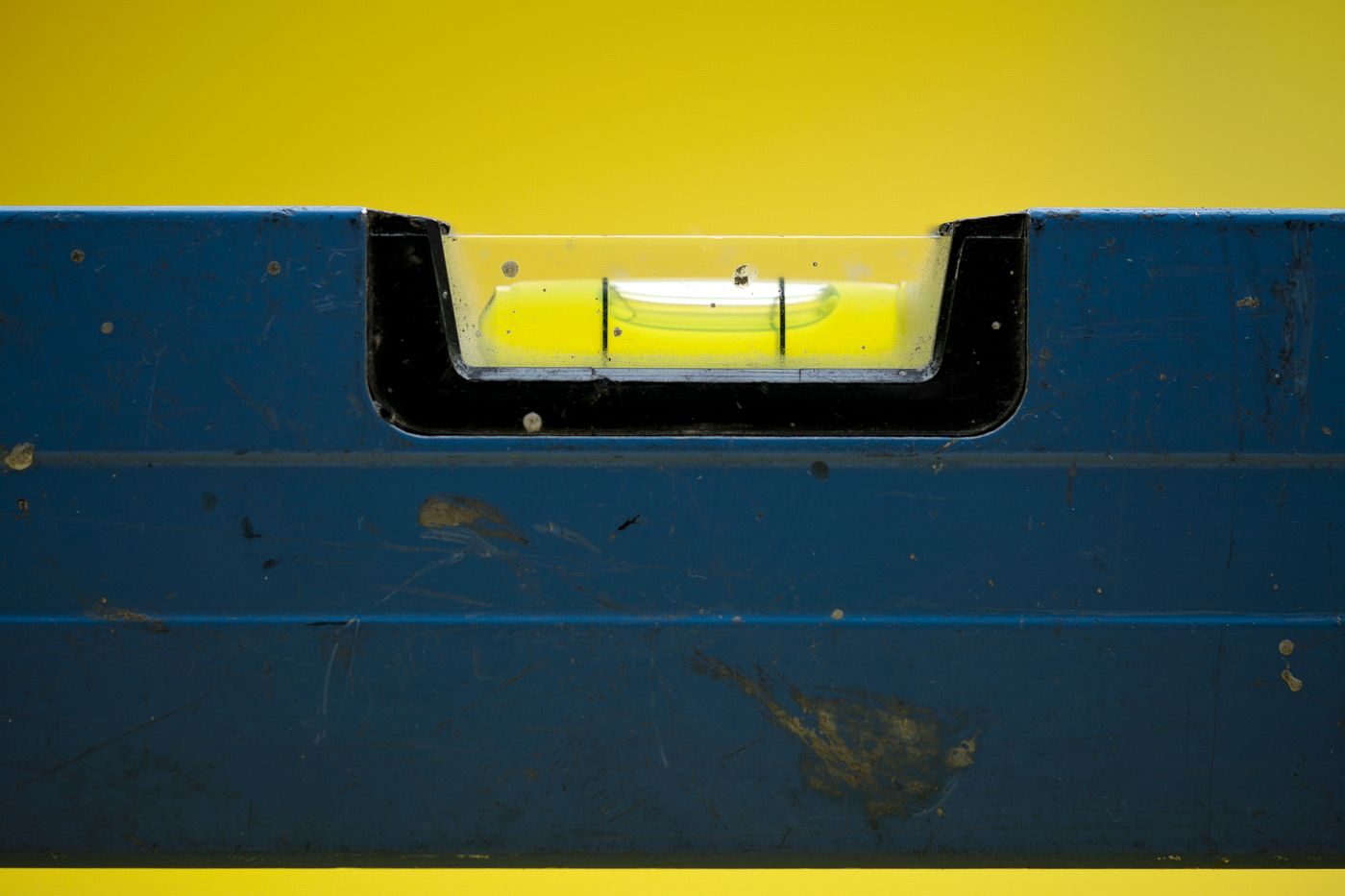
We check the floor with a 10-foot straightedge and mark every high and low spot.
- 02
Test and prep
Slabs get a moisture test, crawl spaces get checked for standing water and a vapor retarder, and old flooring and adhesive come up.
- 03
Grind, prime and pour
High spots are ground, the surface is primed and low areas are patched or poured with leveler.
- 04
Cure and re-check
Once the leveler cures, we measure again before the new floor goes down.
How flat is flat enough for your new floor?
Every floor type has its own flatness rule, and the installation follows the strictest one that applies.
- Vinyl plank and LVT Shaw's guidelines allow no more than 3/16 inch of deviation over 10 feet. See vinyl flooring installation.
- Large tile For tile with an edge of 15 inches or longer, the ANSI A108.02 standard allows no more than 1/8 inch in 10 feet. See tile installation.
- Hardwood and laminate Follow the flatness limit in the product's own install guide.
- Thin-set isn't a leveler The Ceramic Tile Foundation warns against using thin-set or heavy tile mortar to flatten a floor, so leveling is a separate step.
What affects the cost and timeline?
No two leveling jobs are priced the same. These are the things that move the number.
- Raised or slab Wood subfloors over a crawl space and concrete slabs use different materials and steps.
- Size and depth of the low spots A few shallow dips take far less material than a whole room that slopes.
- Moisture fixes A wet crawl space or a damp slab has to be dealt with first.
- Removal and cure time Old flooring, glue and the leveler's cure time all add days before the new floor goes in.
Where we level floors and how to get a free estimate
We level floors across New Orleans, Metairie, Kenner, Gretna, Slidell and the Northshore; see all our service areas. Often it's the first step before a new floor, and it's also part of our subfloor preparation work.
For a free estimate, tell us whether the house is raised or on a slab, which rooms feel uneven and what floor you plan to put down.

Explore
Related services
Carpet Cleaning
Learn more about Carpet Cleaning
Carpet Installation
Learn more about Carpet Installation
Epoxy Flooring Installation
Learn more about Epoxy Flooring Installation
Reviews
What Customers Say About TurnKey Floorings
Rated by Our Satisfied Customers
As a builder, I’ve worked with numerous flooring contractors over the years, but my experience with Turnkey Floorings stands out. They were extremely professional, and their installation of carpet flooring for a big project was flawless. The client was ecstatic with the outcome, and I look forward to our future projects.
Charlie Cleghorn
They have transformed my hotel! Their suggestion of flake flooring for the lobby was a hit, adding an unexpected touch of luxury. Their team was professional and completed the project on time. They are the best flooring contractors in New Orleans.
Eve Harper
I recently had epoxy flooring installed in my garage by Turnkey Floorings. The quality of their work exceeded my expectations. They were professional, punctual, and their attention to detail was commendable. I am really happy with the outcome and highly recommend them.
Frank Johnson
I’m so glad I hired Turnkey Floorings for our floor heating installation. Their service was top-notch, and the crew was very informative and friendly. They made sure to explain everything and answered all of our questions. I wake up every morning to warm floors, thanks to them.
Josephine Lewis